HONDA 756-908 Intake Manifolds
fits model: Cbr500r. make: Honda. year: 2017.
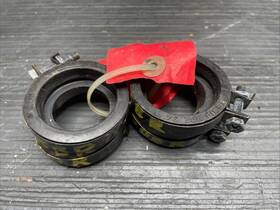
( Manufacturer Part Number: 756-908 ), ( Part Type: Intake Manifold ), ( Country Of Origin: Japan )
Review HONDA Intake Manifolds Oem #217267 fits CBR500R 2017
The **2017 Honda CBR500R Intake Manifolds (Part Numbers 756-908)** represent a critical yet often overlooked component in the performance and reliability of this popular sportbike, designed to optimize airflow and throttle response while maintaining the engine s structural integrity. Crafted from high-quality aluminum alloy, these manifolds are engineered to withstand the high temperatures and pressures generated by the CBR500R s liquid-cooled, fuel-injected inline-four cylinder engine, ensuring durability across a wide range of riding conditions from spirited track sessions to daily commutes. The manifolds feature precision-machined passages that minimize turbulence and maximize volumetric efficiency, allowing the engine to breathe more freely and achieve smoother power delivery, particularly in the mid-to-high RPM range where the CBR500R excels. Their sleek, aerodynamic design not only enhances performance but also complements the bike s sporty aesthetic, blending functionality with a clean, aggressive look. Whether you're a rider seeking to fine-tune stock performance, a tuner looking to support aftermarket modifications like cold air intakes or performance exhausts, or a mechanic maintaining the bike s longevity, these intake manifolds serve as a foundational element that directly influences throttle response, fuel economy, and overall engine health. Built to Honda s exacting standards, they are a direct replacement for the original equipment, ensuring a perfect fit with minimal modifications required, making them an essential upgrade for those aiming to preserve or enhance the CBR500R s legendary balance of power and precision.
### **Pros and Cons of Buying Aftermarket Intake Manifolds for a 2017 Honda CBR500R (756-908)**
#### **Pros:**1. **Improved Airflow and Performance** Aftermarket manifolds are often designed with better airflow characteristics than the stock unit, allowing for increased horsepower and throttle response. Some manufacturers use CNC-machined or 3D-printed designs to optimize airflow dynamics.
2. **Better Throttle Response** A more efficient intake system can reduce turbo lag (if applicable) and improve spool-up times, making the bike feel more responsive, especially in low-to-mid RPM ranges.
3. **Enhanced Exhaust Note** Some aftermarket manifolds contribute to a more aggressive exhaust tone, which can be appealing for enthusiasts who prefer a sportier sound.
4. **Compatibility with Modifications** If you plan to add other performance parts (e.g., a high-flow air filter, upgraded throttle body, or exhaust), an aftermarket manifold can better integrate with those upgrades.
5. **Lightweight Options Available** Some aftermarket manifolds use aluminum or titanium construction, reducing overall weight compared to the stock castings, which can improve handling and acceleration.
6. **Customization and Aesthetics** Many aftermarket manifolds offer unique designs, colors, or finishes that can enhance the bike s appearance, appealing to those who prioritize styling.
7. **Potential for Better Fuel Efficiency (in Some Cases)** If the manifold improves combustion efficiency, it may lead to slightly better fuel economy under certain conditions, though this is often negligible compared to stock.
---
#### **Cons:**1. **Cost** Aftermarket manifolds typically range from **$200 to $600 **, depending on the brand and materials. This is a significant investment, especially if you re not planning extensive modifications.
2. **Installation Complexity** Some manifolds require **removal of the stock unit, throttle body, and possibly the ECU tuning** for optimal performance. Improper installation can lead to leaks, poor performance, or even damage to the engine.
3. **ECU Tuning Required** Most aftermarket manifolds **alter the engine s air-fuel ratio**, meaning you ll need a **standalone ECU (e.g., Power Commander, Haltech, or MapPromax)** to remap the bike. Without tuning, you may experience **rough idling, hesitation, or reduced reliability**.
4. **Potential for Voiding Warranty** Honda s factory warranty may be voided if aftermarket parts are installed, especially if they interfere with the engine s OEM calibration.
5. **Risk of Poor Quality or Mismatched Parts** Not all aftermarket manifolds are created equal. Cheaper options may have **poor machining, weak welds, or incorrect porting**, leading to **leaks, reduced performance, or even engine damage** if they cause excessive backpressure.
6. **Compatibility Issues** Some manifolds may not fit perfectly with stock components (e.g., throttle body, sensors), requiring additional modifications or adapters.
7. **Minimal Real-World Gains (Compared to Stock)** While some riders report noticeable improvements, others find that the gains are **subtle** unless combined with other upgrades (e.g., exhaust, fueling changes). The **CBR500R is already well-tuned**, so marginal gains may not justify the cost for casual riders.
8. **Maintenance and Reliability Concerns** Aftermarket parts, especially those from lesser-known brands, may have **shorter lifespans** or require more frequent inspections for leaks or wear.
---
### **Conclusion:**Aftermarket intake manifolds for the **2017 Honda CBR500R** can provide **measurable performance benefits** for riders who are already running or planning other modifications (e.g., exhaust, fueling, or ECU tuning). However, they are **not a "quick win"** they require **proper installation, tuning, and sometimes additional parts** to unlock their full potential.
For **casual riders or those on a budget**, the stock manifold is likely sufficient, as the performance gains may not be worth the cost. However, for **enthusiasts who want a more aggressive feel, better throttle response, or are building a heavily modified bike**, a high-quality aftermarket manifold (paired with tuning) can be a worthwhile upgrade.
---
### **Recommendation:** 1. **If You re Not Tuning or Modifying Further:**- **Skip the aftermarket manifold.** The stock unit is already well-engineered, and the gains from an intake alone will be minimal.
2. **If You re Adding Other Performance Parts (Exhaust, Fueling, etc.):**- **Invest in a reputable aftermarket manifold** (e.g., **K&N, Akrapovic, or Racepimp**) and **pair it with a standalone ECU tune** (Power Commander, Haltech, or MapPromax).
- **Stick to well-reviewed brands** (avoid no-name or extremely cheap options) to ensure quality and compatibility.
3. **If You Want Aesthetics Over Performance:**- Consider a **cosmetic-only manifold** (e.g., carbon fiber or custom-painted) that doesn t significantly alter airflow but improves looks.
4. **If You re on a Tight Budget:**- Focus on **other upgrades first** (e.g., high-flow air filter, exhaust, or ECU tune) before dropping money on an intake manifold, as those may yield better returns.
**Final Verdict:**An aftermarket intake manifold is a **valid upgrade for serious modders**, but it s **not essential** for most riders. If you proceed, **do your research, invest in quality parts, and ensure proper tuning** to avoid disappointment or engine issues.
Details:
2017 CBR-500R. Intake manifolds.
part #: 756908 prices
- $25.00-$194.92
specifications intakefuelmotorcycle:
- for models: Cbr500r
- for makes: Honda
- for years: 2017
- mpn: 756-908
- part type: Intake Manifold
- country of origin: Japan
payments intakefuelmotorcycle:
- other
- wallet: Google-pay
- credit card: Mastercard
returns intakefuelmotorcycle:
- policy: No Returns
seller intakefuelmotorcycle:
- city: Marcus Hook, Pennsylvania
- # reviews: 8315
- rating: 100.0%
shipping intakefuelmotorcycle:
- service: Standard
- transit: 3-7 Days
- type: Fixed
- cost: $12.00
- class: Standard
offer intakefuelmotorcycle:
- quantity: 1
- options: Ship-to-home
- sold: 0
- availability: In Stock
- started: February 17, 2026
general intakefuelmotorcycle:
- Motorcycle Scooter Parts Accessories > Air Intake Fuel Delivery > Other Air Intake Fuel Delivery
- condition: Used
Honda 756-908 Is Similar To:
- Insulator Set Intake Mikuni Carburetors Vm29 Rubber Honda 005-026 Cb750 (34.9% similar) Made by pup racing. Rubber intake insulator set honda CB750 miking VM29 carburetors set of 4 rubber intake insulators, manifolds or carburetor holders, call em what you like...(November 5th, 2014)
- Vt1300cx Intake Fits Power-flo System Fury Black Cobra Honda 06-0133b 2010-2012 (26.9% similar) Cobra power Flo intake system black fits honda VT1300CX fury though you might be tempted to install cobra's new power Flo air intake just because it looks better than stock, you'll be getting a lot more than a great styling update...(July 19th, 2014)
- 07-08-09-12-13-14-honda-17111-kbg-670-carburetor Joint Holder Pipe Insulator Honda Intake Manifold Boot Carb Rebel (27.2% similar) Thanks and ride safe. Intake manifold boot carb CMX250C rebel this is an that was pulled off a 2005 honda. CMX250C rebel the condition is good and manifold ready for use. The part number shows it will fit these model's...(February 27th, 2018)
- 101830 Intake Conversion Kit Honda Goldwing (32.7% similar) Now you re ready to install whatever high-flow air filter like. It fits on-top of the intake kit perfectly, and inside shape frame your bike like a glove. The original air box takes up valuable space, and adds significant time to removal of carburetors. This intake kit for the GL1000 and GL1100 ...(October 17th, 2018)
- 1061689 Honda Airbox Air Intake Filter Box (41.2% similar) Many countries only allow 79 max package length and girth combined. Each part is systematically placed to be easily located once purchased. If the item does not fit motorcycle model's specified in listing...(April 25th, 2018)
- 1065565 Honda Metropolitan Airbox Air Intake Filter Box (36.4% similar) If the item does not fit motorcycle model's specified in listing. Many countries only allow 79 max package length and girth combined. More options available upon request. Each part is systematically placed to be easily located once purchased...(July 7th, 2018)
- 2 11-3609 Intake 02-06 Crf450r Carburetor Manifold Honda Pack 02-14 Crf450x (35.4% similar) K l supply carburetor intake manifold 2 pack carb holder sits in between the carburetor and cylinder...(July 22nd, 2014)
- Cbx 1979-1980 1047 Intake Manifold 16211-422-000 Carb To Boots Replace I33 6-cylinder Honda Head 11-7314 (32.7% similar) Set includes 6 boots same part number is used for all cylinders. These are Japanese made replacement direct fit for these model's only, and are manufactured to the same dimensions and specifications as original parts. Also, colors may be different in other countries so please verify your color, size...(November 8th, 2014)
- 11337-hm8-a50 Honda Nos Oem Gear Reduction Cover Gasket (23.6% similar) Part HM8-A50 o-ring model count 7 TRX250TE footrace recon es ATV location: gr. What you see in the pics is get...(October 23rd, 2018)
- 12-91170 Emgo Honda Air Filter Cleaner Element Vfr Interceptor New Oem (33.6% similar) Your friends at classic cycle parts appreciate business...(November 10th, 2018)
- 1200-01 Supply Honda Intake Orings (31.5% similar) ...(October 27th, 2018)